
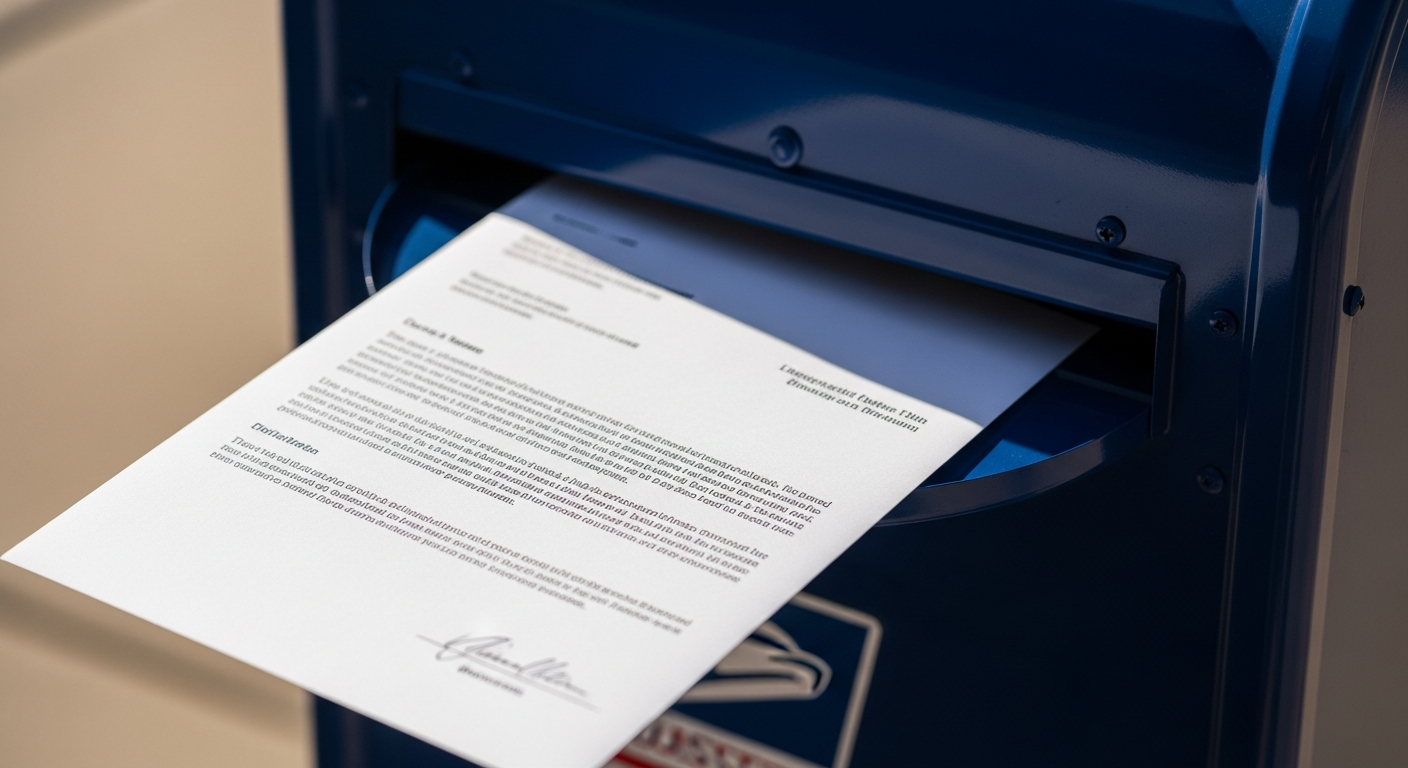
Physical mail still wins in legal disputes. Not because it's old-fashioned, but because it creates a documented paper trail that email simply cannot replicate. When you need to send a legal notice, the method of delivery matters as much as the content — and knowing how to send legal notice by mail online can be the difference between a compelling case and a dismissed claim.
This guide covers every major type of legal notice, the mailing rules that govern each, and how to handle the entire process online without printing a single page.
Table of Contents
- Why Physical Mail Carries Legal Weight
- Types of Legal Notices That Require Physical Mail
- Mailing Methods: Certified, Registered, and First-Class
- Legal Rules Governing Notice by Mail
- How to Create a Paper Trail That Holds Up
- How to Send a Legal Notice by Mail Online
- Using WriteToMail for Legal Notices
- Common Mistakes That Invalidate a Legal Notice
- FAQ
- Sources
Why Physical Mail Carries Legal Weight
Email is fast and convenient. For legal notices, those qualities can work against you.
Email delivery is difficult to prove definitively. Spam filters intercept messages without any notification to the sender. Recipients can claim non-receipt with plausible deniability. And critically, email timestamps are easy to manipulate.
Physical mail through USPS operates under a different set of rules entirely. Federal courts and state statutes routinely recognize USPS postmarks and certified mail return receipts as proof of delivery. The Uniform Commercial Code — which governs commercial transactions across most U.S. states — establishes that written notices sent by mail become effective upon deposit in the postal system, not upon receipt. That's a meaningful legal distinction.
Courts also apply what's known as the "mailbox rule": once a properly addressed, stamped letter is deposited into USPS custody, it is presumed delivered. This common law doctrine has been recognized by U.S. federal courts and adopted in most states, giving physical mail a presumption of delivery that no email service can claim.
Beyond doctrine, physical mail signals seriousness. A formal letter on paper — with a return address, a dated postmark, and a professional format — communicates that the sender is prepared to escalate. Many disputes are resolved at the notice stage precisely because the physical letter signals credibility that a text or email doesn't.
Types of Legal Notices That Require Physical Mail
Some legal notices are recommended to send by mail. Others are legally required to be mailed. Here's the breakdown.
Demand Letters
A demand letter formally requests payment, action, or legal remedy from a recipient. Most small claims courts require a demand letter be sent before filing. While courts don't always mandate a specific delivery method, physical mail — particularly USPS First-Class Mail — creates the clearest record.
Learning how to write a demand letter that actually gets paid starts with understanding that delivery method affects credibility. A demand letter delivered by hand or email can be dismissed as informal. One sent via USPS carries institutional weight.
Cease and Desist Letters
Cease and desist letters demand that a party stop an infringing or harmful activity — trademark violations, harassment, copyright infringement, contract breaches. They're not court orders, but they establish a documented record of notice. If a dispute escalates to litigation, the C&D letter becomes evidence that the defendant had knowledge of the violation and continued anyway.
Physical mail is strongly preferred here. For a full breakdown of the process, the guide on how to send a cease and desist letter covers every element your letter needs to include.
Eviction and Landlord-Tenant Notices
These notices are often legally mandated to be delivered by physical mail — and state statutes frequently specify the exact method. Pay-or-quit notices, lease termination letters, and notices to cure violations commonly require USPS First-Class Mail, certified mail, or both. Failure to use the correct delivery method can invalidate the notice entirely, forcing landlords to restart the eviction clock.
Breach of Contract Notices
When a party fails to meet contractual obligations, written notice is typically required before legal remedies become available. Many contracts include a "notice clause" specifying how notices must be delivered. Physical mail — often certified — is the default method named in most commercial contracts.
Pre-Litigation Statutory Notices
Certain legal actions require a formal notice period before filing a lawsuit. Medical malpractice claims in many states require written notice to the defendant 60-90 days before filing. Consumer protection statutes often require a pre-suit demand letter. Government tort claims have formal notice requirements with strict deadlines. For all of these, physical mail with a verifiable delivery date is the only defensible option.
Mailing Methods: Certified, Registered, and First-Class
Not all USPS mail is created equal for legal purposes. The method you choose affects your evidentiary record.
USPS First-Class Mail
First-Class Mail delivers in 1-5 business days and includes a postmark date. It's legally sufficient for most demand letters, cease and desist letters, and general legal notices. Under the mailbox rule, First-Class Mail creates a presumption of delivery once sent.
For many legal purposes, First-Class Mail is entirely adequate — and sometimes preferable, because recipients are more likely to actually open an unmarked letter than one requiring a signature.
Certified Mail
Certified mail provides a tracking number and an optional Return Receipt (the green card). The recipient must sign for the letter, and USPS records the delivery date. Courts treat certified mail return receipts as strong evidence of delivery.
Many statutes — particularly landlord-tenant laws and pre-litigation notice requirements — specifically require certified mail. Check the applicable statute before choosing your method.
Registered Mail
Registered mail is the highest security level USPS offers. Every handler signs for the piece at each stage of transit, creating a chain of custody. It's slower and more expensive than certified mail, but appropriate for high-value legal documents or international notices.
Legal Rules Governing Notice by Mail
The rules vary significantly by jurisdiction and notice type. Here are the frameworks that govern most situations.
The Mailbox Rule: Recognized by federal courts and most state courts, this common law doctrine establishes that a properly addressed and stamped letter, once deposited with USPS, is presumed delivered. Defendants who claim non-receipt bear the burden of rebutting this presumption.
State-Specific Landlord-Tenant Statutes: Every state has its own requirements for landlord-tenant notices. California, for example, requires that three-day notices be served by personal delivery, post-and-mail, or certified mail depending on the situation. Texas allows First-Class Mail for eviction notices but adds days to the notice period when mail is used. Always verify your state's specific requirements before sending.
Contract Notice Clauses: Most commercial contracts include a notice provision that specifies the acceptable delivery methods, addresses, and timing rules. If a contract says "by overnight courier or certified mail," sending via email or First-Class Mail may not satisfy the requirement, even if the other party receives it.
Federal Pre-Suit Notice Requirements: Several federal statutes impose written notice requirements before litigation. The Fair Debt Collection Practices Act requires debt collectors to send a written validation notice. The Americans with Disabilities Act requires a pre-suit notice for architectural barrier claims in some circuits. These requirements exist precisely because physical written notice creates a record.
How to Create a Paper Trail That Holds Up
Sending the letter is step one. Documenting it properly is what makes that letter legally useful.
Date the letter: The date on the letter should match — or closely precede — the date of mailing. A letter dated three weeks after the postmark raises questions.
Keep a copy: Retain a complete copy of exactly what was sent — including any attachments or enclosures. If the dispute goes to court, you'll need to produce the exact document you mailed.
Record the mailing method: Note in your own records whether you sent via First-Class Mail, certified mail, or another method. If using certified mail, retain the green return receipt card once signed and returned.
Use a consistent address: Send to the recipient's last known address, and if the notice is for a business entity, also consider sending to the registered agent address on file with the state's Secretary of State office.
Send multiple ways when high stakes: For critical legal notices, many attorneys recommend sending the same letter via both First-Class Mail and certified mail. If the recipient refuses to sign for certified mail, the First-Class Mail copy — and its presumption of delivery — still creates a valid record.
Online mailing services that provide a delivery record and postmark documentation can support your paper trail without requiring a trip to the post office.
How to Send a Legal Notice by Mail Online
The traditional process for mailing a legal notice involves drafting the letter, printing it, buying an envelope, applying the correct postage, and driving to a post office or drop box. That's fine — but it's also 2026, and there's no reason to do any of that manually.
Online mail platforms let you compose, customize, and physically mail a legal notice entirely from your browser. The platform handles printing, postage, and USPS delivery. You get the legal credibility of physical mail without owning a printer or knowing where the nearest post office is.
Here's the general process:
- Draft your notice — either write it from scratch, use a template, or describe what you need and let AI generate a draft
- Customize the content — add the recipient's name, relevant dates, amounts, deadlines, or legal citations
- Enter the recipient's mailing address — the platform formats this for USPS delivery standards
- Review the final document — confirm the letter looks exactly as intended before sending
- Submit the mailing — the platform prints, envelopes, stamps, and deposits your letter with USPS
The entire process takes under 60 seconds for a standard single letter. For property managers or law firms sending notices to many recipients at once, bulk mailing via CSV upload handles hundreds of letters simultaneously.
Using WriteToMail for Legal Notices
WriteToMail is built precisely for this use case. The platform lets individuals, businesses, and law firms compose and send physical legal notices online — no printer, no stamps, no post office.
Here's what makes it specifically useful for legal notice situations:
AI-powered drafting: Describe what you need — "a demand letter for $3,400 in unpaid freelance invoices, 10-day deadline, signed by me" — and the AI generates a professionally structured draft. You edit it to match your exact situation.
Legal templates: WriteToMail offers dedicated templates for demand letters and cease and desist letters — the two most common legal notice types for individuals and small businesses. For specialized notices like a cease and desist letter for trademark infringement, you can start from a template and customize every section.
PDF upload and mail: If you've already drafted your legal notice in Word, a PDF, or another format, you can upload it directly and have it mailed without retyping anything.
USPS First-Class Mail delivery: Every letter is physically printed and delivered via USPS First-Class Mail — the standard that courts recognize under the mailbox rule.
Bulk mailing for multiple notices: Property managers sending lease termination notices to multiple tenants, or law firms handling bulk demand letter campaigns, can upload a CSV and send personalized letters to every recipient in one submission. Variable fields like name, address, amount due, and deadline populate automatically.
SOC 2 compliant and HIPAA-compliant: For legal and healthcare-adjacent notices, data security isn't optional. WriteToMail's printing and data handling is SOC 2 compliant and HIPAA-compliant.
Dedicated features for law firms: WriteToMail offers a dedicated plan for law firms at writetomail.com/for-law-firms — built for volume, compliance, and consistent professional output.
For landlords specifically, the guide on how to send landlord-tenant notices by mail walks through every notice type and explains exactly when physical mail is legally required.
Common Mistakes That Invalidate a Legal Notice
Even well-drafted legal notices can fail if the delivery is flawed. These are the errors that come up most often.
Wrong address: Sending to an outdated address — especially for a business entity that has moved — can defeat the notice. Check the Secretary of State's business registry for the current registered agent address.
Wrong delivery method: If a statute or contract requires certified mail and you sent First-Class Mail, the notice may not satisfy the legal requirement. Read the applicable rule before choosing a method.
No copy retained: If you can't produce a copy of the exact letter that was sent, you'll struggle to prove what the recipient was notified of. Always keep a complete copy.
Incorrect notice period: A 30-day lease termination notice sent 25 days before the deadline doesn't satisfy the requirement, regardless of how well-written it is. Count the days carefully, especially when mailing adds transit time.
Missing required elements: For many legal notices, specific language is required by statute. A pay-or-quit notice that omits the exact amount owed, or a breach of contract notice that fails to identify the specific contractual provision breached, may be legally insufficient.
FAQ
Do legal notices have to be sent by certified mail?
Not always. Certified mail is required by specific statutes and contract clauses — but many legal notices are legally effective when sent by First-Class Mail under the mailbox rule. Check the applicable statute or contract notice clause before choosing your method.
Can I send a legal notice by email instead of physical mail?
Email may be acceptable if both parties agreed in writing to electronic notice delivery — often called an "e-notice clause." Without that agreement, physical mail is the safer and more legally defensible option for most disputes.
Does a legal notice have to come from an attorney?
No. Individuals can send their own demand letters, cease and desist letters, and other legal notices. An attorney's letterhead may add perceived authority, but it is not legally required for most notice types.
What is the mailbox rule and why does it matter?
The mailbox rule is a legal doctrine holding that a letter is deemed legally effective when it is properly deposited with USPS — not when it is received. This matters because it prevents recipients from claiming a notice was late simply by refusing delivery or claiming they never received it.
How long does it take for a legal notice sent online to be delivered?
USPS First-Class Mail typically delivers in 1-5 business days. When using WriteToMail, the letter is printed and deposited with USPS promptly after you submit your order — so delivery timelines are consistent with standard First-Class Mail.
What should I do if someone refuses to accept certified mail?
Refused certified mail is still legally significant. Courts often treat the refusal itself as evidence that the party had notice. Sending a duplicate via First-Class Mail (which doesn't require a signature) simultaneously provides additional protection under the mailbox rule.
Can I send a legal notice online if I already have a drafted document?
Yes. Platforms like WriteToMail accept PDF uploads. If you've already drafted your notice in Word or any other tool, you can upload the PDF and have it mailed without retyping anything.
Sources
- Cornell Law School Legal Information Institute — Uniform Commercial Code — referenced for UCC provisions on written notice effectiveness upon deposit with USPS
- Cornell Law School Legal Information Institute — Mailbox Rule — definition and legal basis for the mailbox rule as recognized by U.S. courts
- USPS — Certified Mail — delivery standards, return receipt options, and legal documentation features
- USPS — Registered Mail — chain-of-custody standards and use cases for high-security legal documents
- California Courts Self-Help Guide — Landlord-Tenant Notices — state-specific notice requirements for eviction procedures in California
- Federal Trade Commission — Fair Debt Collection Practices Act — written validation notice requirements under the FDCPA
- American Bar Association — Model Rules of Professional Conduct — context on professional standards for legal correspondence
Sending a legal notice by mail doesn't require a lawyer, a printer, or a trip to the post office. The tools exist to do it entirely online — with AI drafting, professional templates, and USPS delivery — in less time than it takes to find a parking spot at the post office.
If you're ready to send a legal notice by mail online today, WriteToMail handles everything from drafting to delivery.