
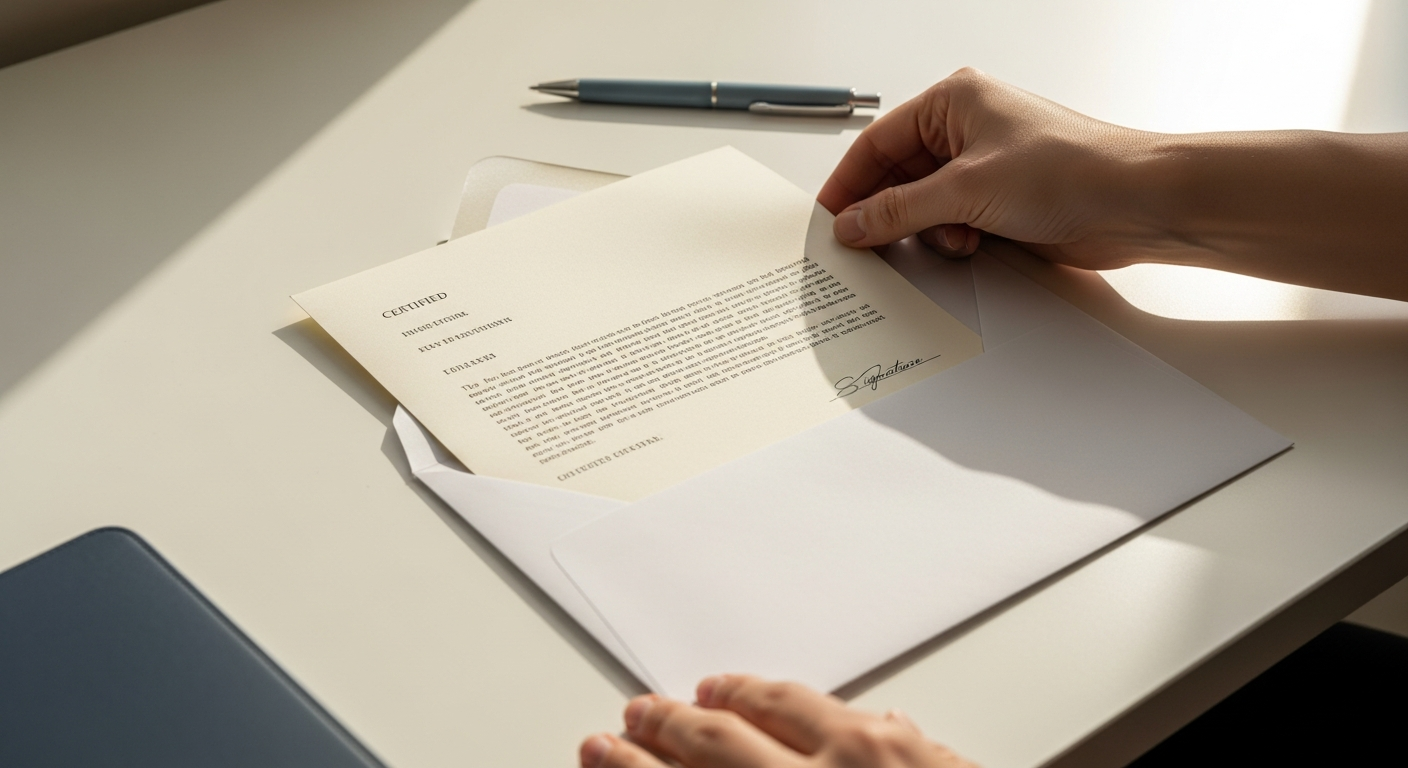
Sending a DMCA takedown notice by mail is one of the most legally defensible steps a copyright holder can take. Email works for many situations, but a physical letter to an ISP, hosting provider, or infringing party creates a paper trail that email simply cannot replicate. Courts and service providers take mailed notices seriously — and if this ever escalates to litigation, you'll want documented proof that you followed the statutory process.
This guide gives you a ready-to-use template, walks through every required element under 17 U.S.C. § 512(c), and shows you how to get it in the mail today — without a printer or a trip to the post office.
Who This Template Is For
This template is built for:
- Individual creators — photographers, writers, musicians, videographers who found their work copied without permission
- Small business owners — brands dealing with unauthorized use of product images, copy, or proprietary content
- Law firms and attorneys — who need a fast, documented physical mailing process for copyright clients
- Content agencies and publishers — managing takedown volume across multiple clients or properties
You do not need to be an attorney to send a DMCA takedown notice. The DMCA is a self-help mechanism — Congress wrote it to be accessible to rights holders directly. That said, if the infringement is commercial in scale or you're pursuing damages, involving a lawyer is worth the cost.
Why Mail a Physical DMCA Takedown Notice?
Most DMCA takedown requests go through web forms or email. Those work — but they have real weaknesses.
Email can be ignored, filtered, or disputed. A service provider can claim they never received it. Web form submissions produce no physical record. Physical mail, by contrast, creates a timestamped artifact. When you send a legal notice by mail online, you get a delivery record tied to a specific address and date.
The Copyright Office itself notes that designated DMCA agents are required to maintain a physical address for service. That physical address exists precisely because Congress anticipated formal written notice. Sending to that address — on paper — is the approach the statute contemplates.
There's also a practical effect: mailed letters get opened and read at a higher rate than email. A physical envelope that arrives at a company's legal or compliance department triggers a different level of attention than an inbox notification.
The Statutory Requirements: 17 U.S.C. § 512(c)(3)
Before you look at the template, understand what the law actually requires. A DMCA takedown notice is only valid if it contains all of these elements:
- A physical or electronic signature of the copyright owner or authorized agent
- Identification of the copyrighted work claimed to have been infringed
- Identification of the infringing material and its location (URL or sufficient description)
- Contact information for the complaining party (address, phone, email)
- A good faith belief statement — that the use is not authorized by the owner, their agent, or the law
- A statement of accuracy under penalty of perjury — and that you are the owner or authorized to act on their behalf
Miss any one of these, and the notice is legally deficient. A service provider can reject it without liability. The template below includes all six.
DMCA Takedown Notice Template
Copy and customize the text below. Replace all bracketed fields with your specific information before sending.
[YOUR FULL NAME OR COMPANY NAME] [Your Street Address] [City, State, ZIP Code] [Your Phone Number] [Your Email Address] [Date]
DMCA Agent / Legal Department [Name of ISP, Hosting Provider, or Infringing Party] [Their Street Address] [City, State, ZIP Code]
Re: DMCA Takedown Notice — Copyright Infringement Under 17 U.S.C. § 512
Dear DMCA Agent / Legal Department,
I am the copyright owner (or authorized agent acting on behalf of the copyright owner) of the work described below. I submit this notice pursuant to the Digital Millennium Copyright Act, 17 U.S.C. § 512(c)(3), to notify you of content on your network or service that infringes my copyright.
1. Identification of the Copyrighted Work
The copyrighted work at issue is:
- Title/Description of Work: [e.g., "Photograph titled 'Sunset Over the Hudson' created on June 15, 2023"]
- Copyright Registration Number (if registered): [e.g., VA 2-345-678, or "Not yet registered"]
- Original URL or location where my work is published: [e.g., https://www.yourwebsite.com/portfolio/sunset-hudson]
2. Identification of the Infringing Material
The infringing material is located at the following URL(s):
- [Infringing URL #1: e.g., https://www.infringingsite.com/blog/stolen-photo]
- [Infringing URL #2, if applicable]
- [Additional URLs as needed]
If the content is not accessible via a direct URL, the infringing material can be described as follows: [Provide a specific description sufficient for the service provider to locate the material.]
3. Contact Information
Name: [Your Full Name] Company (if applicable): [Your Company Name] Address: [Your Full Mailing Address] Phone: [Your Phone Number] Email: [Your Email Address]
4. Good Faith Belief Statement
I have a good faith belief that the use of the copyrighted material described above is not authorized by the copyright owner, any agent of the copyright owner, or the law.
5. Accuracy and Perjury Statement
I declare under penalty of perjury that the information in this notification is accurate and that I am the copyright owner or am authorized to act on behalf of the copyright owner of the exclusive right being infringed.
6. Signature
[Your Handwritten or Electronic Signature] [Your Printed Name] [Date]
This notice is submitted in good faith under 17 U.S.C. § 512(c)(3). Please confirm receipt of this notice and the action taken in response at the contact information listed above.
Section-by-Section Breakdown
Section 1: Identification of the Copyrighted Work
Be specific here — vague descriptions invite rejection. Instead of "my photo," write "Color photograph titled 'Morning Light, Brooklyn Bridge,' created March 4, 2024, published at [URL]."
If your work is registered with the U.S. Copyright Office, include the registration number. Registration isn't required to send a valid DMCA notice, but it strengthens your legal position — and if you pursue litigation, registered works qualify for statutory damages up to $150,000 per willful infringement under 17 U.S.C. § 504(c).
Section 2: Identification of the Infringing Material
This is where many notices fail. You need to give the service provider enough information to locate and remove the content. Always include the full URL. If the content appears in multiple places on the same platform, list each one separately.
For images embedded in pages, include the page URL and a description of where on the page the image appears (e.g., "third image in the gallery section"). For videos, include a timestamp if relevant.
Section 3: Contact Information
Use your real name and a mailing address where you can receive a response. If you're sending the notice on behalf of a client (as an attorney or agent), include your contact information and clearly state your authority.
Sections 4 and 5: The Legal Declarations
Do not modify these. The language mirrors the statute directly. Altering the good faith statement or the perjury declaration can render the notice legally ineffective — or worse, expose you to liability if the claims are false. Under 17 U.S.C. § 512(f), knowingly misrepresenting infringement in a DMCA notice can result in damages, costs, and attorney's fees.
Section 6: Signature
For a physical letter, sign it by hand before mailing. If you're sending via an online mailing platform, type your full name as a signature — courts have accepted typed signatures in mailed correspondence as valid under ESIGN and state equivalents.
Customization Tips by Use Case
Photographer or visual artist: In Section 1, describe the image with as much specificity as possible — dimensions, subject, date of creation, and platform of original publication. Screenshot the infringing use before sending the notice, in case the infringer removes it after receiving your letter.
Writer or blogger: Identify the specific article, post, or excerpt infringed. Quote the opening lines if needed. Include your publication date to establish priority.
Music or audio creator: Reference the sound recording and the underlying musical composition separately if both are owned by you — they are distinct copyrights under U.S. law.
Law firm sending on behalf of a client: Add a line at the top stating you are legal counsel for the copyright owner, include your bar number and firm address, and adjust the perjury statement to reflect that your declarations are based on information and belief where appropriate.
Sending to a large hosting provider (AWS, GoDaddy, Cloudflare): Look up the registered DMCA agent in the U.S. Copyright Office's Agent Directory. Major providers have specific agents — sending to the wrong address can delay action.
How to Use This Template: Quick-Start Section
Follow these five steps to send your DMCA takedown notice by mail today:
Step 1 — Gather your evidence. Screenshot the infringing content, note the exact URL, and locate your original work. You'll need both.
Step 2 — Identify the right recipient. Find the DMCA agent for the hosting provider using the Copyright Office's agent directory. For a direct-to-infringer notice, use their mailing address from their website or WHOIS records.
Step 3 — Fill in the template. Replace every bracketed field. Read through the completed letter once to verify all six statutory elements are present.
Step 4 — Draft and mail through WriteToMail. Go to WriteToMail, paste your completed letter into the editor or use the AI letter writer to polish your draft, enter the recipient's address, and send. WriteToMail handles printing, postage, and USPS First-Class Mail delivery — no printer, no stamps, no post office visit required. The letter ships same day for orders placed before the cutoff.
Step 5 — Keep a record. Save a copy of the letter you sent, the date, and the recipient's address. If you need to follow up or escalate, this documentation is essential.
Why Physical Mail Creates a Stronger Legal Record
A physical letter sent via USPS First-Class Mail is timestamped at the point of mailing. That timestamp can be critical if you later need to prove when you notified the service provider.
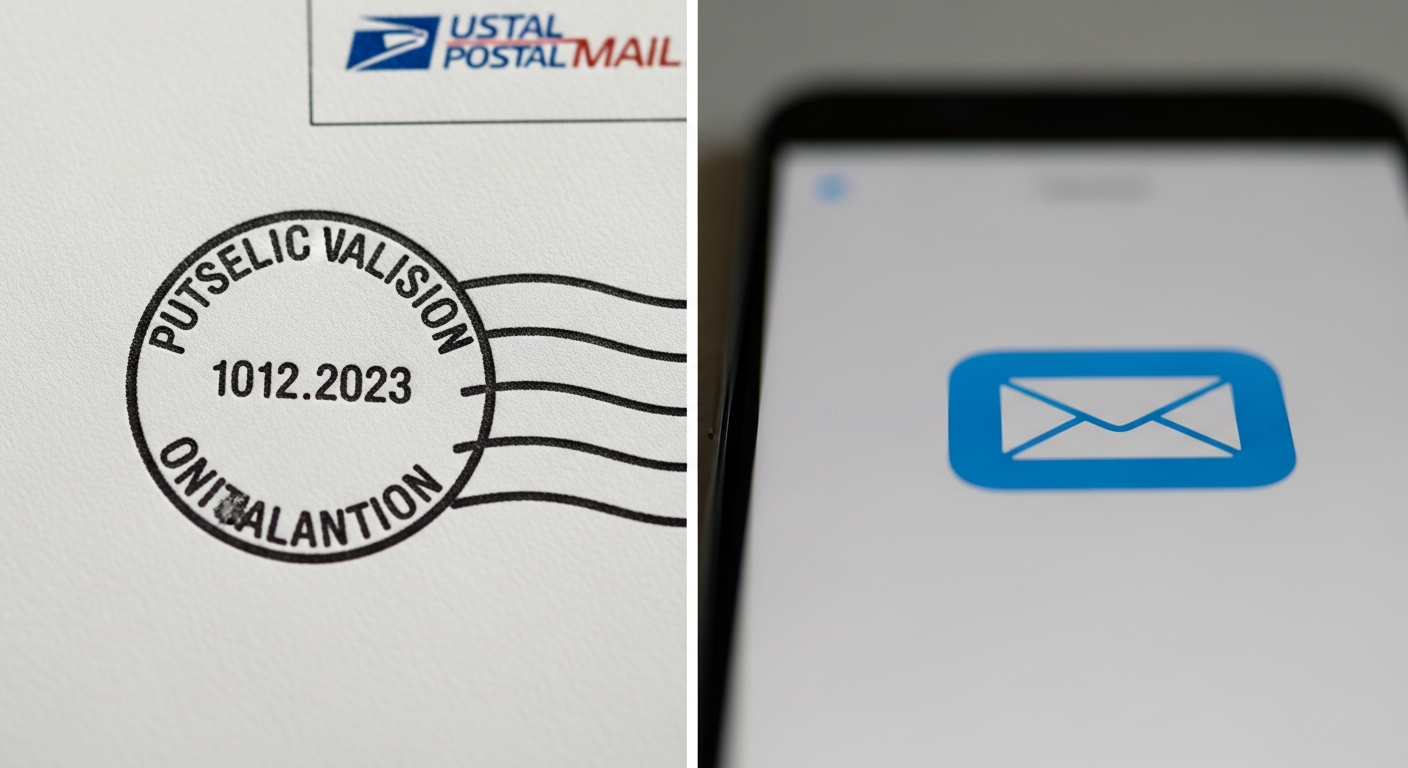
Compare that to email: there's no universal delivery confirmation, spam filters can block the message, and the sender has no third-party attestation that the notice was dispatched on a specific date. Courts have consistently treated physical mail as more reliable evidence of formal notice than email in IP and contract disputes.
For copyright holders dealing with repeat infringers or large-scale commercial theft, the combination of a properly formatted statutory notice and a documented physical mailing is the foundation of a defensible legal record. If you later need to pursue litigation, a Section 512(f) counter-claim against a bad-faith notice, or a subpoena to unmask an anonymous infringer, having that paper trail matters.
This same principle applies across legal correspondence generally — whether you're sending a cease and desist letter for trademark infringement or a breach of contract demand. Physical mail carries weight that digital communication doesn't.
Sending Multiple DMCA Notices at Scale
If your content has been scraped and republished across dozens of sites — a common problem for photographers, stock image creators, and news publishers — sending individual letters manually doesn't scale.
WriteToMail's bulk mailing via CSV upload lets you send personalized DMCA notices to hundreds of recipients simultaneously. Upload a spreadsheet with each recipient's name, address, and infringing URL, map the columns to your template's variable fields, and the platform handles the rest. Every letter is individually printed and mailed — each one personalized, none of them generic.
Law firms managing copyright portfolios for multiple clients use this workflow to send takedown notices at volume without the overhead of physical mail logistics.
What Happens After You Send the Notice
A compliant service provider under 17 U.S.C. § 512 must act "expeditiously" to remove or disable access to the infringing material upon receiving a valid notice. In practice, major platforms act within 24–72 hours for clear-cut cases. Smaller hosts may take a week or more.
The infringer may respond with a counter-notification under § 512(g). If that happens, the service provider must notify you, and you have 10–14 business days to file a lawsuit to prevent content restoration. This is where your documented mailing record becomes especially valuable — it establishes the timeline.
If you receive no response and the content remains up, a follow-up letter or escalation to legal counsel may be warranted. The cease and desist letter mailing service article covers escalation pathways if you need to move from a takedown notice to a formal demand.
Conclusion
Sending a DMCA takedown notice by mail is straightforward when you have the right template and understand what the statute requires. The six elements under 17 U.S.C. § 512(c)(3) are non-negotiable — include all of them, be specific about the infringing material, and send the letter to the right recipient.
Physical mail gives you something a web form submission never will: a documented record that your notice was sent, when it was sent, and where it went. For copyright holders serious about protecting their work, that record is worth every step of the mailing process.
WriteToMail makes the mailing step take about 60 seconds. Compose your letter in the editor or let the AI writer help you draft it, enter the recipient's address, and the platform handles printing, postage, and USPS delivery. Your notice ships the same day.
Sources
- 17 U.S.C. § 512 — Cornell Legal Information Institute — Full statutory text of the DMCA safe harbor and takedown notice requirements
- 17 U.S.C. § 504(c) — Cornell Legal Information Institute — Statutory damages provisions for copyright infringement, including willful infringement caps
- U.S. Copyright Office — DMCA Designated Agent Directory — Official directory of registered DMCA agents for service providers, required for proper notice delivery
- U.S. Copyright Office — Section 512 Study — Copyright Office analysis of the DMCA's notice-and-takedown system, including findings on compliance practices
- Electronic Signatures in Global and National Commerce Act (ESIGN) — FTC Overview — Legal basis for electronic and typed signatures in formal correspondence
- U.S. Copyright Office — Copyright Registration — Official guidance on registering works and the legal benefits of registration before infringement occurs